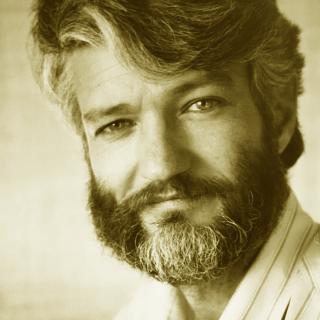
Walter Berweger was born on 5 March 1953 in the city of St Gallen, Switzerland, where he completed his primary and secondary schooling. He began an apprenticeship in 1969 soon after finishing school. He worked for Natural AG, an international shipping firm, for around four years, first as a commercial employee and, for the final year, as a forwarding agent. Keen to advance his career, Walter enrolled in a business school in St Gallen in 1973 and emerged three years later with a diploma in marketing and sales. During his studies, he held two short-term positions, one with the company Schreiber Suco-Werk, and the other with a local language school where he taught French and English to adults. Walter’s penchant for languages – his native tongue was Swiss German, and he was also proficient in Spanish – was complemented by a love of literature.
In 1976, Walter joined DEXPA Sàrl, a French farm-product exporter based just south of Paris. He worked as a management assistant in marketing and commercial relations for around three years. He then went to TUSA SA, an aluminium packaging company in French-speaking Switzerland, where he headed the sales team for three years, until 1981. Walter received top marks from all his employers – he got on well with colleagues and customers, never lost his cool, and met all his professional goals. The only person not fully satisfied was Walter himself. During this period, he began developing an expertise in the field of international development. In 1975, he travelled to Turkey, Syria, Lebanon, Jordan and Israel, in part to gain a fuller understanding of the Israeli-Palestinian conflict. And in 1981, after resigning from TUSA, Walter embarked on a sprawling journey during which he visited much of Latin America and several countries in West Africa. He returned to Switzerland in 1983 with broad, first-hand knowledge of the types of economic and social problems faced by developing countries.
Following his travels, Walter was intent on finding a position where he could put his know-how to work for the benefit of people in need. He was level-headed and single-minded; a rational thinker and attentive observer; and possessed by a strong desire to engage in humanitarian work. All these traits came through in his July 1983 job interview with the ICRC, which then hired him for field work.
After his initial training in October 1983, Walter was sent to the ICRC’s Sidon delegation in Lebanon to serve as an administrator. That nine-month assignment (November 1983 to August 1984) was followed immediately by a year-long one in Quetta, Pakistan (August 1984 to August 1985), where he held the same position. By the end of that posting, Walter had shown that, with his methodical approach and positive, constructive attitude, he was ready for a more hands-on, operational role and greater responsibilities. He was given that chance in El Salvador, where he worked as a delegate for just over a year (December 1985 to January 1987). He helped provide assistance to people affected by the civil war in the western and central parts of the country and served as a liaison with local military officials. He also had a hand in other tasks, such as visiting POWs and political detainees, negotiating with the authorities, and tracing people who had gone missing as a result of the conflict. Drawing on his past experience in the region, Walter made the most of a situation in which success often depended on outside factors. He was subsequently recommended for a position as a detention delegate in order to round out his training.
Instead of another field mission, however, Walter was then brought back to ICRC headquarters in Geneva. He worked first as a finance assistant (February 1987 to August 1988) and then as head of sector in external resources (September 1988 to May 1989).
That period at headquarters was followed immediately by an assignment in the Philippines to serve as head of the ICRC’s subdelegation on Mindanao Island. On 19 January 1990, some eight months into that mission, Walter and two Red Cross colleagues were ambushed by unidentified armed men dressed in civilian clothes. Walter was killed on the spot, as was Juanito Patong a member of the Philippine Red Cross, while the third person – a local ICRC employee – was lightly wounded. Walter was 36 years old.
Walter achieved the goal he had set for himself – to work in the field, shoulder to shoulder with those in need. By combining his humanitarian convictions and his formidable administrative and managerial skills, he was able to make a difference to people exposed to the devastating consequences of conflict.